What Determines The Price Of A Solar‑Powered Borehole Pump System?
Date
Category
Knowledge

High monthly utility bills and unreliable grid power make groundwater access challenging for remote homesteads, livestock farms, and off‑grid properties. Many property owners turn to solar‑powered borehole pumps, yet most buyers are shocked by the wide price gaps between different complete pump kits.
While the upfront expense can seem steep, you should view a solar borehole pumping setup as a long‑term asset for stable groundwater access rather than a one‑time gadget purchase. Total expenses vary heavily according to local borehole conditions, daily water consumption, and component grade.
In this buyer‑focused guide, we break down what moves your final budget, compare popular pump constructions, explain critical motor and controller hardware, and answer real‑world user questions. By the end, you will know how to select equipment matching your site and budget without overspending or buying under‑sized hardware.
Key Variables That Shape Solar Borehole Pump System Expense
If you are creating a budget for your solar submersible borehole project, random price quotes will create confusion. Three site‑specific parameters carry the biggest weight: total dynamic head, required water flow volume, and the scale of your photovoltaic array. All three together define which pump model you need and your overall project outlay.
A deeper bore demands greater lifting power. Higher daily water output requirements call for stronger pump assemblies. Both situations force you to install larger solar panel setups, pushing total costs upward. These are site‑dependent calculations, so there is no universal fixed price tag for every installation.
Borehole Depth & Total Dynamic Head (TDH)
Borehole depth is the single largest cost driver for your whole solar pumping system. Total Dynamic Head (TDH) covers far more than just how deep your borehole goes. TDH includes vertical lift from the water level up to ground storage tanks plus pressure losses caused by friction inside water pipes.
Pumps working against higher TDH need more torque and more robust internal parts. A unit built for 150‑foot boreholes cannot reliably deliver water from 600‑foot depths. Heavier‑duty motors also consume more wattage, requiring additional solar modules. This creates cascading cost increases across your full kit.
Borehole Depth (Feet) | Complete System Price Estimate |
|---|---|
0‑150 | $1,500 – $2,100 |
150‑300 | $2,300 – $3,100 |
300‑800+ | $3,400 – $10,800+ |
For boreholes deeper than 400 feet, remember to plan for extra installation costs. Heavy‑lifting truck equipment may be required to lower and retrieve submersible pump hardware, adding to your overall project expenditure.
Required Water Flow in Gallons Per Minute (GPM)
Your household or farm’s daily water needs establish your target flow rate measured in gallons per minute. Livestock watering often calls for slow, steady water delivery all through daylight hours. Crop irrigation, however, needs large‑volume water output within short time windows.
Flow capacity is decided by the pump’s wet end assembly, consisting of rotors, impellers and internal flow channels. Higher‑GPM configurations use bigger, more complex parts paired with higher‑wattage drive motors.
Oversizing your pump will waste capital on power hardware you will never fully use. Conversely, an undersized pump struggles to meet demand, forcing continuous motor overload and shortening service life.
For residential planning: roughly count one GPM for each major water fixture like taps and showers. This simple method helps you land at a balanced specification without unnecessary spending. Commercial farm operations need to calculate peak irrigation demand to get accurate GPM targets.
Sizing Your Solar Panel Array
Your pump motor’s power draw sets how many solar panels you will have to purchase. Panels must deliver adequate wattage even under sub‑optimal sunlight conditions. Solar modules are commonly priced between $1.00‑1.50 for each watt of rated output.
A compact 200‑watt pump may only need two pieces of 100‑W solar panels. A heavy‑duty 800‑watt unit will require eight or more matching panels. You also need to budget mounting hardware: pole‑mount or ground‑mount racking can range between $200 up to $2000 depending on array scale.
Motor efficiency directly influences your panel count. Premium BLDC motors operating above 90 % efficiency produce equal water volume with fewer solar panels than low‑efficiency alternatives, trimming your total system investment.
Different Solar Borehole Pump Types & Their Use‑Cases
Modern solar borehole pumps mostly run off high‑efficiency BLDC motors, yet their internal pumping mechanics differ significantly. Each design targets distinct borehole depth ranges, water quality conditions and flow requirements, creating clear gaps in price and real‑world suitability.
Helical Rotor (Screw‑Type) Solar Pumps: Low‑Flow, Ultra‑High‑Lift
Helical rotor screw pumps excel for extreme depth scenarios. A stainless‑steel turning rotor spins inside a durable rubber stator. Sealed moving cavities push groundwater steadily upward, generating substantial pressure for very deep boreholes, sometimes beyond 800 feet.
This pump design copes remarkably well with sandy, silty groundwater common in newly drilled boreholes, as it has fewer easily‑damaged precision components compared to impeller‑style centrifugal pumps.
The trade‑off is limited throughput: screw pumps deliver comparatively low flow rates. They fit domestic drinking water and livestock watering in arid zones, yet are not suitable for large‑scale high‑volume crop irrigation.
Spec Point | Helical Rotor Screw Pump |
|---|---|
Ideal Use | Deep boreholes (300‑800+ ft), high sand content water |
Typical Flow | Low (2‑10 GPM) |
Lift Performance | Exceptionally high |
Primary Applications | Off‑grid homes, livestock watering in dry regions |
Main Strength | Great sand tolerance, outstanding deep‑lift performance |
Drawback | Not built for high‑volume irrigation workloads |
Plastic Impeller Centrifugal Solar Pumps: Versatile Workhorse For Farms
Plastic multi‑stage centrifugal impeller pumps represent the mainstream solution for most agricultural and rural residential installations. Series‑stacked rotating impellers accelerate water and build pressure stage‑by‑stage.
Engineered composite impeller material balances solid wear resistance and competitive pricing. These pumps can achieve high flow output within shallow‑to‑moderate borehole depths up to roughly 300‑400 feet. They perform well for farm irrigation, filling large livestock tanks and multi‑fixture off‑grid homes.
Limitations emerge under two conditions: extremely high‑pressure deep borehole operation, or heavily corrosive groundwater containing high mineral or acid content. For standard well water quality, plastic impeller units deliver outstanding value for money.
Stainless‑Steel Impeller Centrifugal Solar Pumps: Premium Corrosion‑Resistant Option
Stainless‑steel impeller pumps adopt the same centrifugal operating principle, but fabricate impellers, diffusers and pump housing out of SS304 or superior stainless‑steel grades.
This upgrade delivers far better resistance against abrasion and chemical corrosion. It is made for harsh groundwater: alkaline, acidic or mineral‑rich well water that will gradually degrade plastic components.
Though purchase cost sits higher than plastic‑impeller equivalents, stainless‑steel hardware enjoys longer working life in aggressive water chemistry. It reduces replacement labour costs and downtime for critical water supplies, making it the preferred pick for premium residential sites and commercial operations facing challenging water quality.
BLDC Permanent‑Magnet Motors: The Heart Of Solar Pump Performance
Every reputable modern solar borehole pump relies on brushless DC permanent‑magnet synchronous motors. This core hardware delivers efficiency ratings above 90 %, which shapes both running performance and your overall system cost.
Many buyers fixate on pump wet‑end parts like screws or impellers. Nevertheless, motor quality is the decisive factor determining long‑term reliability and total‑cost‑of‑ownership. Older budget‑grade pumps still deploy brushed DC motors; these run inefficiently and wear out quickly. Adoption of BLDC technology transformed the practicality of solar groundwater pumping across global remote locations.
High‑Efficiency Motor Design Reduces Your Solar Hardware Budget
BLDC permanent‑magnet motors deliver major real‑world savings. At equal power output, they can be smaller and lighter than traditional AC motors. Their >90 % efficiency outperforms brushed DC motors (60‑75 % efficiency) and conventional grid‑fed AC motors.
Greater efficiency means less input solar wattage to achieve identical water output. In practical terms: a 92 %‑efficient BLDC setup might need only an 800‑W solar array. A lower‑efficiency motor system doing the same pumping work may need 1000 W worth of panels. That difference can save you hundreds of dollars in upfront solar hardware expense.
High starting torque also lets BLDC motors kick‑off smoothly under dim sunlight, extending daily usable pumping hours.
Long Service Life And Minimal Maintenance Needs
The “brushless” construction eliminates carbon brush components. In older brushed‑type motors, physical carbon brushes wear away over time and become the most frequent failure source.
BLDC motors create rotating magnetic fields electronically, driving permanent‑magnet rotors with zero physical contact points subject to wear. For submersible units installed hundreds of feet underground in isolated locations, this low‑wear design is extremely valuable. Pulling a pump out from deep boreholes for servicing is expensive and labour‑intensive. Investing in quality BLDC hardware helps you steer clear of unplanned repairs.
Smart Controllers & Hybrid Power Capabilities: Solving Solar Intermittency
Solar pumping faces one fundamental limitation: it only generates power under sunlight. Without intelligent control hardware, water delivery stops during heavy cloud cover or night‑time hours. Contemporary solar pump kits integrate smart MPPT controllers, and many models add AC‑DC hybrid functionality to deliver round‑the‑clock water security. The controller acts as the system’s central brain, managing power transfer and offering vital hardware protection.
MPPT Controllers: Extract Maximum Power From Available Sunlight
MPPT (Maximum Power Point Tracking) is a DC‑DC conversion unit. It continuously adjusts the electrical working point of solar panels, locking onto the peak power output point that shifts with light intensity and temperature.
Compared against simple direct panel‑to‑pump wiring, MPPT hardware can boost overall system energy harvest by as much as 30 %. Your pump can start pumping earlier in the morning and keep operating later in evenings. It maintains reduced‑speed pumping even on overcast days.
Beyond energy optimisation, integrated protection features defend against over‑voltage, over‑current, and dangerous dry‑run conditions where the pump spins without intake water, extending the whole assembly’s service lifespan.
AC‑DC Hybrid Operation: Achieve 24‑7 Uninterrupted Water Supply
For projects requiring non‑stop water availability, hybrid AC‑DC controllers deliver game‑changing functionality. This controller accepts dual power feeds: DC input from solar panels plus AC supply coming from mains grid or backup diesel generators.
System logic prioritizes free solar DC power whenever sunlight levels are sufficient. When cloud conditions drop solar production, it can blend supplementary AC power to sustain target pump speed, preserving as much solar energy as possible. When darkness falls or bad weather persists for multiple days, the unit will fully switch over to AC power input automatically. No manual intervention is required.
Hybrid systems merge solar energy’s low‑cost independence with the rock‑solid reliability of grid or generator backup power.
Conclusion
Pricing for solar borehole pumping systems is not static; it is heavily dictated by borehole depth, daily water demand, local groundwater chemistry and component quality.
When planning your project, avoid only comparing sticker prices of complete kits. Evaluate TDH requirements, select pump mechanics matched to your water quality, prioritize high‑efficiency BLDC motors, and consider whether MPPT or hybrid AC‑DC control features are necessary for your use‑case. Thoughtful specification delivers long‑term stable groundwater access for off‑grid homes, livestock sites and agricultural operations.
Frequently Asked Questions
How many solar panels do I need to run my borehole well pump?
For typical household and small‑farm solar borehole pumps, you will require between two to eight 100‑watt solar panels. Exact quantities depend entirely on the motor’s rated watt consumption.
What service life can I expect for a solar borehole pump system?
Well‑built complete solar borehole pump systems generally deliver 10‑20 years of operation. BLDC motors offer exceptional durability, and most solar panels carry manufacturer warranties for 25 years.
Can solar borehole pumps fill water storage tanks?
Absolutely, this is one of the most common deployment scenarios. Your pump fills storage tanks in daylight hours, and gravity provides consistent water pressure for use day and night.
Will solar borehole pumps keep working on cloudy days?
They still operate under cloud cover, though flow output decreases. MPPT controllers optimise weak incoming solar irradiance to sustain partial pumping. If you need full‑capacity pumping regardless of weather, select an AC‑DC hybrid configuration.
What maintenance tasks are needed for solar borehole pump setups?
Solar borehole systems are nearly maintenance‑free. BLDC motors contain no wearable brush components. Solar panels only need occasional cleaning to clear dust and surface debris.
Does installing a solar borehole pump represent a worthwhile investment?
Yes, particularly for off‑grid locations or regions suffering from high electricity rates. Solar pumping eliminates recurring monthly power costs and supplies dependable water with very low ongoing operating expenditure.
Am I able to complete solar borehole pump installation myself?
DIY kit installation is feasible for shallow boreholes under roughly 100‑150 feet. Deeper borehole projects call for certified technicians plus specialised lifting gear for safety and correct setup.
What key differences exist between solar borehole pumps and conventional electric well pumps?
The main distinction lies within motor technology. Solar borehole pumps use high‑efficiency DC brushless motors optimised for photovoltaic power input. Standard well pumps mostly use AC‑driven motors built for constant grid supply and feature lower energy efficiency.
Relevant Models

100HS6-110/6-3.0-A/D
4 HP 2 Inches 6T AC/DC Solar Powered Deep Well Water Pump for Livestock
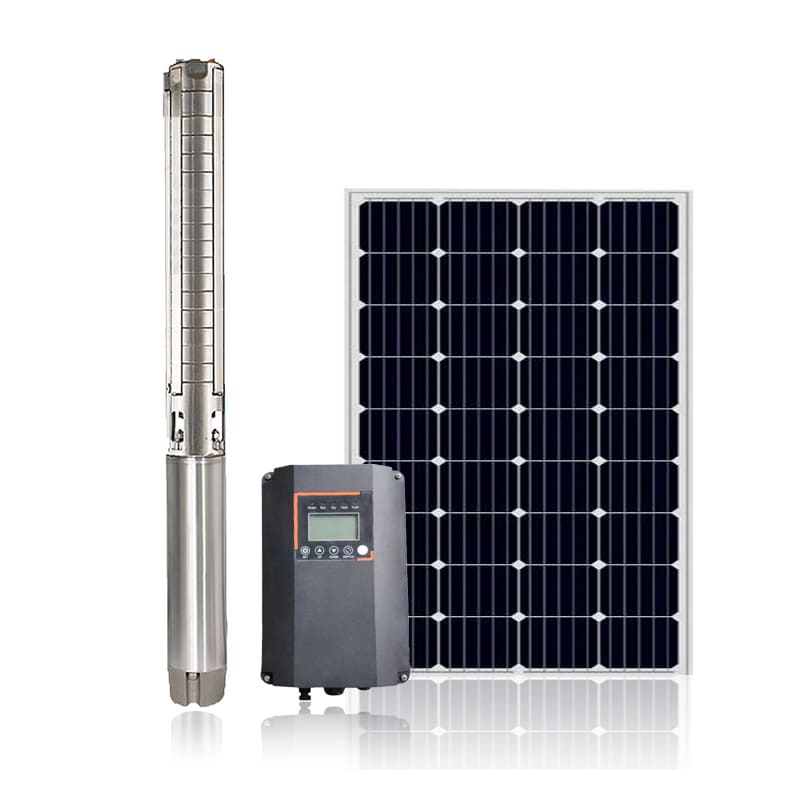
4sp8-15
5100W External Well Solar Submersible Pump for Decorative Ponds
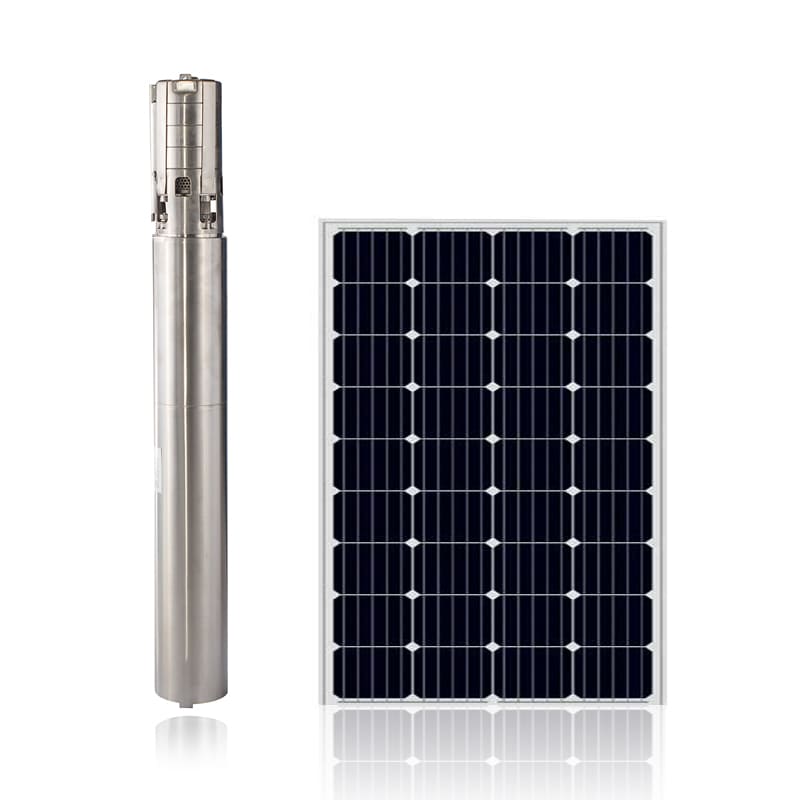
4sp8-2
600W Internal Well Solar Submersible Pump for Wildlife Sanctuaries

4sp8-4
1800W Internal Well Solar Submersible Pump for Disaster Relief Water Supply
More Newscases