Which Solar Deep Well Pump Is Best for Your Business? | Samking Complete Guide
Date
Category
Knowledge

For water pump distributors, project contractors and agricultural solution providers, building a well-targeted product portfolio is the key to capturing fast-growing off-grid markets across Africa, Latin America and Australia. Mismatched pump selection leads to premature failure, rising warranty costs and damaged customer trust.
As a solar pump manufacturer with 10 years of dedicated R&D and 500+ product models, Samking breaks down the three most in-demand deep well pump architectures, along with core system technologies, to help you match every customer’s needs for head, flow rate and water quality.
Solar Screw Pump: The High-Head Specialist for Ultra-Deep Wells
Do your customers struggle to draw water from extremely deep water tables where ordinary centrifugal pumps lose pressure? This is a pervasive challenge in arid regions with low groundwater levels.
A Samking solar screw pump (progressive cavity pump) is the definitive solution for low-flow, high-lift scenarios. Its positive-displacement design delivers stable pressure even at low solar irradiance, and handles sandy well water reliably.
How a Screw Pump Builds Extreme Head
At its core, a precision-machined helical stainless steel rotor rotates inside a wear-resistant rubber stator. As the screw turns, it forms sequential sealed cavities that move steadily from inlet to outlet, pushing a fixed volume of water upward with each rotation.
Unlike centrifugal pumps that accelerate water by force, the screw pump displaces water continuously. This mechanism generates high pressure without relying on high rotational speed, making it highly tolerant of fluctuating sunlight — a critical advantage for standalone solar systems.
Performance Profile: Low Flow, Industry-Leading Head
Engineered to prioritize lifting capacity over volume, it is purpose-built for deep well challenges.
Performance Metric | Rating | Typical Samking Specification |
Flow Rate | Low | 1.2–4.2 m³/hour |
Maximum Head | Very High | Up to 210+ meters |
Sand Tolerance | Excellent | Handles up to 3% sand content |
Peak Efficiency | Good | 74–83% |
Upfront Cost | Moderate | Higher than plastic impeller models |
Ideal Applications and Target Markets
This pump is not designed for large-scale flood irrigation. Its strength lies in reliable daily water access in remote, hard-to-serve locations.
Domestic water supply: Homes and small communities in off-grid areas with deep boreholes
Livestock watering: Remote pastures and rangelands with deep groundwater
Small-scale drip irrigation: Orchards, vineyards and garden plots where pressure matters more than volume
Geographically, demand is strongest across sub-Saharan Africa and parts of Latin America, where deep water tables and unreliable grid power are widespread. Adding a robust screw pump line positions you as a go-to supplier in these high-potential markets.
Solar Plastic Impeller Pump: The High-Flow Workhorse
Do your agricultural clients need cost-effective high-volume irrigation but face tight budget constraints? Cheap standard pumps often wear out quickly in sandy well water, forcing frequent replacements.
The Samking solar plastic impeller pump is a multi-stage centrifugal solution built for farm irrigation and general water supply. It delivers strong water volume at medium head, offering an outstanding balance of performance and affordability.
Multi-Stage Centrifugal Design
This pump operates on centrifugal principle. A motor drives an impeller fitted with angled vanes; water enters the impeller center and is thrown outward, gaining both velocity and pressure.
A multi-stage architecture stacks multiple impeller-diffuser pairs in series. Water passes through each stage and gains additional pressure step by step. The number of stages directly determines maximum head — a 7-stage unit produces more lift than a 5-stage unit of the same diameter.
Why Use Engineered Plastic Impellers?
The term “plastic” understates the material performance. Samking uses high-strength, abrasion-resistant engineering polymers such as modified PPE, which delivers three key benefits:
Superior wear resistance: The polymer withstands fine sand abrasion better than cast iron in typical well conditions, extending service life
Cost efficiency: Molding polymer impellers costs less than casting and machining stainless steel, lowering end-user price
Light weight: Reduced weight cuts shipping costs and allows single-person installation, lowering total project cost
Performance and Economic Value
This model is the volume driver of most distributor catalogs, serving the broadest agricultural customer base.
Feature | Detail | Business Impact |
High flow rate | Often exceeds 11 m³/hour | Meets large irrigation demands and attracts mass agricultural buyers |
Medium head range | Typically 35–85 meters | Fits the majority of non-extreme well depths worldwide |
Economical pricing | Lower upfront investment | Makes solar pumping accessible to more small and mid-sized farms |
Good sand resistance | Tolerates fine sediment well | Reduces warranty claims and improves customer retention |
Note that this pump is not suitable for wells deeper than 85–100 meters or highly corrosive water. Correct positioning is essential for customer satisfaction.
Solar Stainless Steel Impeller Pump: The Premium Durability Expert
Do you serve regions where aggressive water chemistry destroys standard pumps in under a year? Acidic, alkaline or high-salinity groundwater causes rapid corrosion, leading to frustrated customers and reputational damage.
The Samking solar stainless steel impeller pump is built for corrosive water environments. Constructed with SS304 wetted components, it delivers exceptional service life and justifies its premium positioning for high-value, specialized applications.
The Power of SS304 Stainless Steel
SS304 is a premium stainless steel grade renowned for corrosion resistance. Its high chromium and nickel content forms a self-healing passive oxide layer on the surface, which repairs itself if scratched and prevents rust and degradation.
All wetted parts — impellers, diffusers and pump housing — are typically made of stainless steel, preserving both structural integrity and hydraulic efficiency over years of service.
Water Condition | Plastic Impeller | Cast Iron Impeller | Samking SS304 Impeller |
Acidic water (pH < 6.5) | Fair to Poor | Poor (rapid corrosion) | Excellent |
Alkaline water (pH > 8.5) | Good | Fair | Excellent |
High salinity | Poor (becomes brittle) | Poor (pitting corrosion) | Very Good |
Target Applications for High-Value Markets
This pump is not for every buyer, but it is indispensable for niche, high-margin segments. Its use case is defined by water chemistry rather than well depth.
Alkaline soil regions: Inland Australia and similar zones where alkaline groundwater attacks standard pumps
Industrial and mining runoff areas: Chemically aggressive water requires corrosion-resistant construction
High-end estates and ranches: Property owners seeking a “set it and forget it” solution with minimal maintenance
Coastal areas: While not a desalination pump, its salinity resistance makes it far better than plastic for wells with minor saltwater intrusion
Justifying the Higher Cost
Price is the primary objection. The most effective sales approach is to frame value around total cost of ownership (TCO).
A stainless steel pump may cost 40–60% more upfront than a plastic model. However, in corrosive conditions it can last 2–3 times longer — 7–10 years versus 2–3 years for a plastic pump. Customers avoid repeated replacement costs, downtime and service labor. This TCO argument resonates strongly with commercial buyers and project developers.
BLDC Motor: The High-Efficiency Heart of the System
Do your customers complain about the high cost of solar panel arrays for pump systems? The upfront cost of panels is often the biggest barrier to closing a sale.
Every Samking solar deep well pump is powered by a high-efficiency water-cooled BLDC (brushless DC) permanent magnet motor. With efficiency above 92%, it reduces required panel capacity by up to 25% compared with older motor technologies, dramatically lowering total system cost.
What Makes Samking BLDC Motors Superior?
Unlike brushed DC or conventional AC motors, Samking BLDC motors use high-grade neodymium iron boron permanent magnets on the rotor and electronic commutation on the stator. This eliminates physical brushes entirely.
Ultra-high efficiency: No friction loss from brushes, with peak efficiency exceeding 92% versus 60–75% for brushed motors
Long service life: No wearable brushes means maintenance-free operation for 25,000+ hours
Compact and lightweight: High power density reduces size by up to 45% and weight by up to 38% compared with equivalent traditional motors
Strong starting torque: Delivers high torque at low RPM, critical for lifting water from deep wells
Samking’s exclusive water-cooled motor design further improves heat dissipation and durability versus oil-filled alternatives, making it more reliable in continuous-duty scenarios.
The Impact of 92%+ Efficiency on System Cost
Motor efficiency directly translates into solar panel savings. For a 1 HP (750W) pump system:
Motor Type | Motor Efficiency | Required Panel Power | Typical Array Configuration |
Samking BLDC motor | 92% | ~815 W | 4 × 250W panels (1000W) |
Conventional brushed DC | 70% | ~1071 W | 5 × 250W panels (1250W) |
Calculated as pump shaft power ÷ motor efficiency. Arrays are oversized to account for real-world conditions.
A Samking BLDC system requires one fewer panel. At $$150$$250 per panel, this delivers immediate upfront savings and makes your system quote significantly more competitive.
The Role of the MPPT Controller
The BLDC motor works in synergy with an intelligent Maximum Power Point Tracking (MPPT) controller. The controller continuously adjusts the motor’s electrical load to match the solar array’s peak output, regardless of sunlight intensity.
This combination of MPPT logic and high-efficiency BLDC motor maximizes water output per watt of installed solar power. It is this integrated system approach — pump end, motor and controller — that delivers superior real-world performance.
Hybrid AC/DC Systems: Ensuring 24/7 Water Access
Does concern about cloudy days and nighttime water use stop customers from choosing solar? Dependence on sunlight is the single biggest perceived drawback of standard solar pump systems.
Samking hybrid AC/DC controllers eliminate this risk with dual-power capability. The system runs on free solar energy when available, and automatically switches to grid or generator power when needed, guaranteeing uninterrupted 24/7 water supply.
How Hybrid Power Management Works
The intelligence resides in the AC/DC hybrid controller, which features two separate power inputs: DC from solar panels and AC from the grid or a generator. It monitors solar availability in real time and manages power sources automatically.
Full sunlight: The system runs 100% on solar power. AC input remains on standby.
Insufficient sunlight (cloudy conditions): The controller activates hybrid mode, blending available DC solar power with AC power to maximize use of free solar energy before drawing from the grid.
No sunlight (night or heavy overcast): The system switches seamlessly to 100% AC power.
The transition is fully automatic and requires no manual operation, so end users experience no interruption in water supply. Samking hybrid systems support a wide voltage range (60–380Vmp), making them adaptable to unstable grid conditions common in emerging markets.
Expanding Your Market with Hybrid Solutions
A DC-only solar pump is limited to the off-grid market. A hybrid AC/DC system opens up a much larger, more lucrative customer base.
Customer Type | Primary Need | How Hybrid Solves It |
Off-grid farmer | Daytime irrigation | Uses solar by day; can add a generator for nighttime pumping |
Grid-connected homeowner | Lower electricity bills | Uses solar by day to fill tanks or irrigate; grid backup ensures 24/7 supply |
Small commercial operation | Cost reduction + reliability | Cuts operating costs with solar while maintaining full uptime |
Community water project | Uninterrupted supply | Maximizes solar savings while guaranteeing water availability |
This technology transforms solar pumps from a niche off-grid product into a mainstream energy-saving solution. It removes the reliability objection and closes more sales for grid-tied customers.
Conclusion
A profitable solar pump business is not built on a single “best” pump — it is built on the right pump for each application.
By stocking a strategic mix of screw pumps for deep wells, plastic impeller pumps for high-flow irrigation and stainless steel pumps for corrosive water, paired with high-efficiency water-cooled BLDC motors and optional hybrid systems, you can serve every customer segment and dominate your regional market.
Samking supports distribution partners with technical training, custom project sizing and marketing assets. Contact our team to build a tailored product lineup for your market.
FAQs
How long do solar water pumps last?
A properly maintained Samking solar pump system lasts 15–20 years. The motor and controller typically serve over 10 years, while solar panels carry a 25-year power warranty.
Can a solar pump work without a battery?
Yes. Most solar water pumps are designed to run directly from solar panels during daylight hours. Batteries are only required for dedicated nighttime operation without grid or generator backup.
How many solar panels are needed for a water pump?
It depends on pump power rating and local solar irradiance. A high-efficiency Samking BLDC motor can reduce panel requirements by up to 25% compared with older motor technologies.
Can solar pumps run at night?
Standard DC-only solar pumps only operate in sunlight. For nighttime use, you need either a battery bank or a hybrid AC/DC controller connected to grid or generator power.
What maintenance do solar pumps require?
Solar pump systems are very low maintenance. The main tasks are keeping solar panels clean and periodically inspecting wiring and plumbing connections. The submersible unit requires no routine servicing under normal conditions.
How deep can a solar pump go?
It depends on pump type. Samking solar screw pumps can lift water from over 150 meters, while centrifugal impeller pumps are optimized for shallower wells.
Are solar water pumps a good investment?
Yes, especially for off-grid locations or customers looking to reduce utility costs. Payback is typically 2–3 years, after which water pumping is essentially free.
What is the difference between a solar submersible pump and a surface pump?
A submersible pump is lowered into the well and operates fully underwater. A surface pump sits at ground level and draws water from shallow sources such as ponds, rivers or storage tanks.
Relevant Models

100HS6-156/8-4.0-A/D
5 HP 2 Inches 6T AC/DC Solar Powered Water Pump for off-grids Africa
100HS6-211/11-5.5-A/D
7.5 HP 2 Inches 6000 rpm Brushless DC Solar Water Well Pump Screw Water Pump
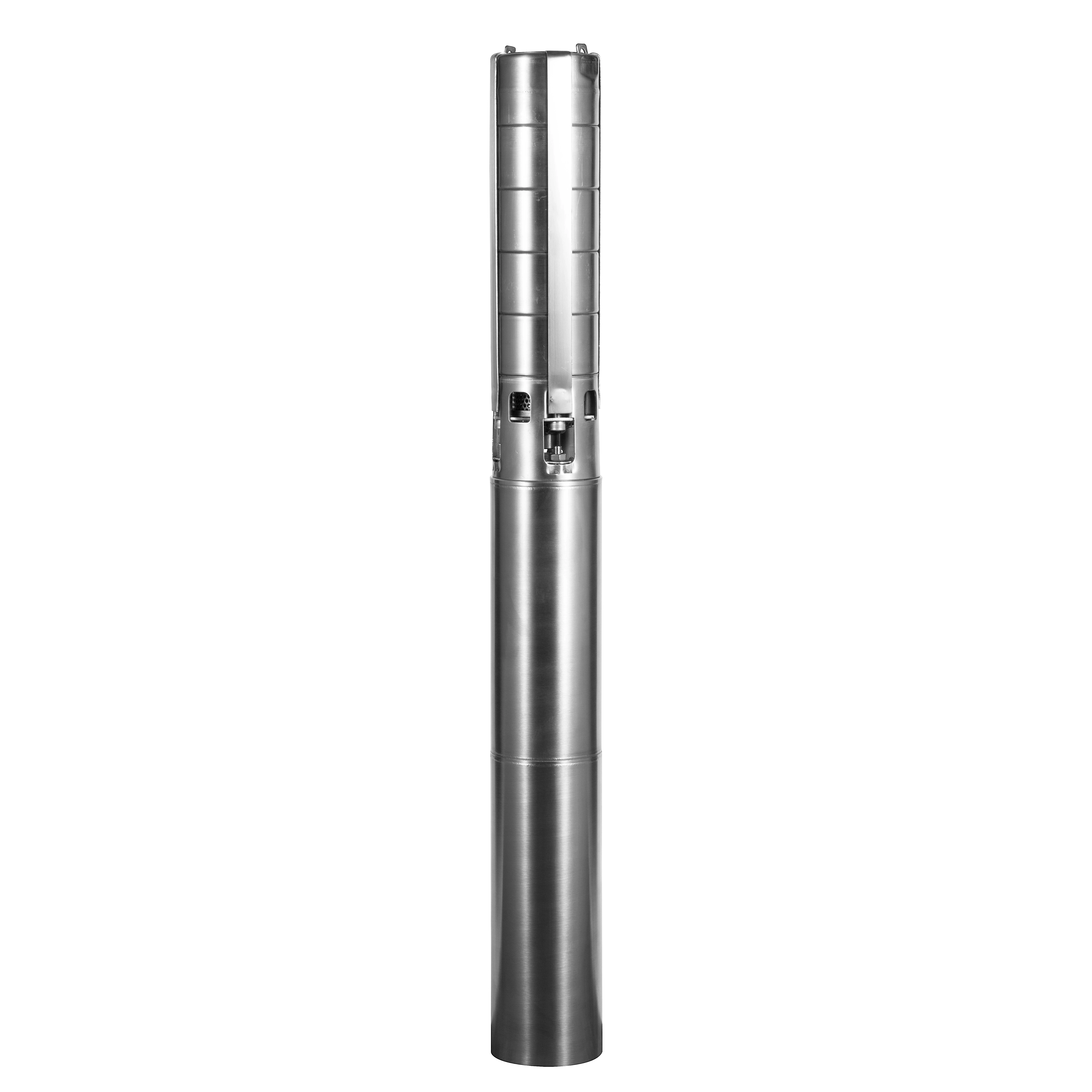
100HS3-256/13-4.0-A/D
5 HP 1.25 Inches DC Solar DC Solar Powered Deep Well for Off-grids Areas
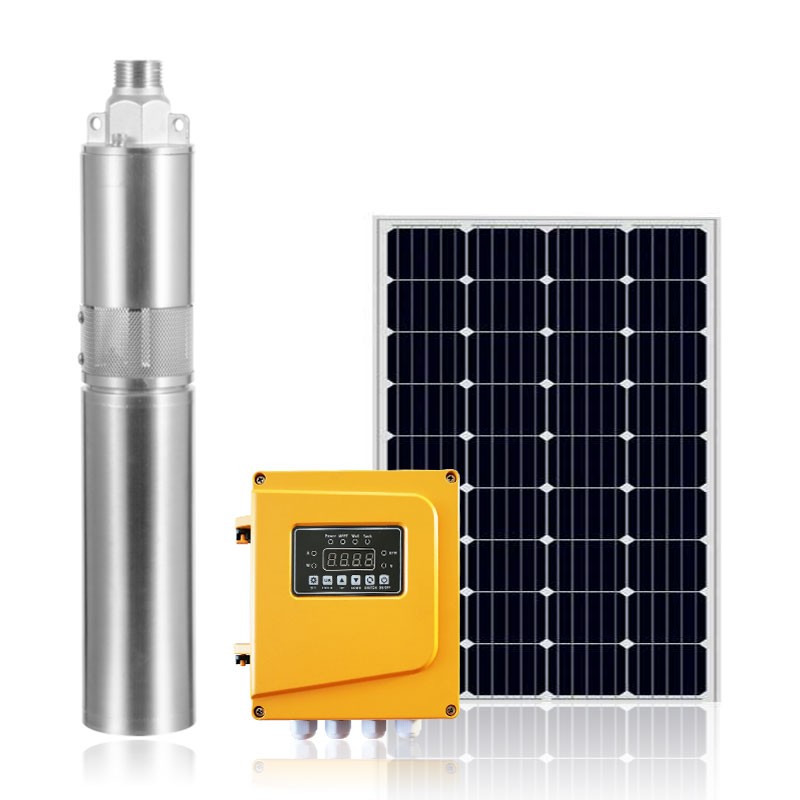
3SPWF 1.5-120
0.75HP 1 Inches DC Solar DC Solar Powered Deep Well Irrigation Pump
More Newscases