Why Do Solar Water Pumps Fail Frequently? Common Failures & Preventive Measures
Date
Category
Knowledge

Mechanical Structural Degradation: The Leading Driver of Premature Pump Damage
Nearly two-fifths of solar pumps retire ahead of their designed service life due to improper assembly and sustained mechanical stress. Localized component damage will trigger a domino effect and destroy the whole pumping system step by step.
1.1 Abrasion and Deterioration of Rotational Bearings
Bearings undertake the stable rotation support of pump shafts and impeller assemblies. Statistical data shows more than 20% of rotating mechanical failures are directly linked to bearing aging.
Worn bearings will produce abnormal friction noise, continuous operating temperature rise and axial shaking during operation. These abnormal conditions will further erode the matching mechanical sealing assembly. In extreme cases, bearing seizure may lead to pump shaft fracture and permanent scrapping of the impeller. Adopting high-precision wear-resistant bearings can effectively slow down this aging process.
1.2 Mechanical Seal Aging & Liquid Infiltration Failure
The mechanical seal serves as an isolation barrier between pumped water and the internal motor assembly. Idle dry operation, hard particulate matter in raw water, chemical pollutants and long-time overheating operation will rapidly damage the sealing surface.
Once the seal fails, water will penetrate into the motor cavity, easily triggering winding short circuit and permanent motor burnout. Equipping dry-run protection sensors, adopting silicon carbide sealing parts and configuring front-end water filtration devices can greatly reduce seal failure risks.
1.3 Assembly Deviation & Extra Mechanical Tension
Misaligned pipeline interfaces, uneven bolt fastening torque, unreasonable tightness of transmission parts and lack of check valves to resist water hammer impact will cause irreversible deformation of the pump body. Long-term additional stress will accelerate the loss of bearings and sealing components. Strictly implement the official installation operation specifications issued by manufacturers as the most basic guarantee for stable pump operation.
2. Medium & Ambient Working Abnormalities: Continuous Erosion to Internal Pump Components
Water quality and actual hydraulic operating conditions will continuously wear the internal flow channel structure of pumps. Three typical medium-related failures are summarized as follows:
2.1 Chemical Corrosion from Special Water Quality
Water with acidic and alkaline properties or high salt concentration will chemically corrode metal pump structural parts. Acid raw water corrodes ordinary cast iron shells, while alkaline water is easy to form scale to block internal flow channels, and brackish seawater will rust conventional carbon steel accessories.
For water areas with harsh water quality parameters, users are advised to select solar pumps equipped with 304 stainless steel or duplex stainless steel impeller components to resist chemical erosion.
2.2 Solid Impurity Blockage & Particle Abrasion
Sediment, plant fibers and suspended debris will block the pump flow passage and cause equipment overheating during operation. Hard granular substances continuously polish the impeller surface and sealing structure, and fibrous sundries are easy to wrap around the rotating impeller to cause pump stalling.
Screw solar pumps are more suitable for deep well water with high sediment content, while centrifugal pumps with plastic impellers can cope with shallow farmland water carrying fine silt particles.
2.3 Cavitation (Vacuum Bubble Collision Damage)
Insufficient liquid level at the water intake end, blocked suction pipelines and residual air inside the pipeline will make the internal pressure of the pump lower than the saturated vapor pressure of water. A large number of vacuum bubbles will be generated inside the pump body, and the instantaneous burst of bubbles will form impact force to peel the surface of impellers and pump shells.
Typical manifestations include harsh operating noise and gradual decline in water output pressure. Maintaining enough water intake liquid level and completely exhausting pipeline air are effective ways to avoid cavitation damage.
3. Power Supply & Electrical Abnormalities: A Common Cause of Motor Burning
The stable operation of the drive motor depends on matched power supply parameters. Voltage fluctuation is one of the core inducements for motor winding overheating and burning.
3.1 Various Hidden Troubles of Power Supply
Three-phase voltage imbalance, long-term overvoltage/undervoltage, phase loss operation and lightning surge impact will make the motor run under overload state, the internal temperature rises sharply in a short time, and finally burn the winding structure.
Installing phase sequence protectors, surge protection modules and overload relays can form a complete electrical protection barrier for the motor.
3.2 Unique Advantages of BLDC Brushless Motors for Solar Pumps
Compared with traditional asynchronous motors, BLDC brushless motors have an overall efficiency higher than 90%, eliminate carbon brush loss failure, keep low temperature during long-time operation, and can output high torque with small volume.
This motor structure can adapt to the unstable power output of photovoltaic panels under changing sunlight intensity, effectively reduce the failure probability caused by motor overheating and properly cut the matching configuration cost of photovoltaic modules.
3.3 MPPT Intelligent Regulation Controller
The maximum power tracking controller improves the utilization efficiency of photovoltaic energy by nearly 30%, supports hybrid power supply modes of photovoltaic power and municipal electricity, automatically stabilizes output voltage and adjusts operating speed, and realizes real-time protection for the drive motor to realize all-weather stable water supply.
4. Match Pump Models According to Working Conditions to Realize Failure Prevention from the Source
To fundamentally cut the failure frequency of solar pumping systems, users need to select matching pump products according to actual application scenarios. Three mainstream solar pump types and applicable scenarios are sorted out below:
Solar screw pump: It has excellent high-lift performance and strong silt resistance, mainly applied to deep water intake projects above 200 meters and water supply for pastoral areas; the only limitation is relatively small water flow.
Centrifugal pump with plastic impeller: It can provide large water flow with favorable procurement cost and resist fine silt abrasion, which is the preferred equipment for shallow farmland irrigation; it cannot adapt to corrosive water quality and ultra-high-pressure deep well environments.
304 stainless steel impeller centrifugal pump: Outstanding anti-corrosion ability, applicable to coastal saltwater areas and water sources with acid-base properties for standardized domestic water supply; the overall purchase cost is relatively high.
5. Frequently Asked Questions About Solar Pump Malfunctions (FAQ Schema Layout for Featured Snippet)
Q1: What visible omens appear before solar pumps fail completely?
Abnormal grinding or whistling sound, external water seepage, sudden drop of water outlet pressure and obvious overheating of pump housing are four typical early warning signals of pump failure.
Q2: Will the pump malfunction even without external water leakage?
Yes. Internal damage of impellers and bearings will directly lead to water cut-off and equipment overheating without external leakage traces.
Q3: What kind of damage will dry operation bring to the pump unit?
Short-time dry running for several seconds will melt the sealing assembly at high temperature and cause permanent damage to core sealing parts.
Q4: Will long-term low voltage damage the supporting drive motor?
Low voltage will raise the motor operating current continuously, and persistent high temperature will scorch the internal winding insulation layer and permanently damage the motor structure.
Q5: Which fault happens most frequently on submersible solar pumps in field deployment?
Water ingress caused by damaged seals and impeller stalling wrapped by foreign contaminants are the two most prevalent faults of submersible solar pumps.
6. Core Conclusions for Long-Term Stable Operation of Solar Pump Equipment
The long-term reliable operation of solar pumps relies on the collaborative matching of three modules: pump body adapted to local water quality and lift parameters, high-efficiency BLDC drive motor and intelligent MPPT regulation controller.
It is not enough to only replace damaged accessories after faults occur. Users must trace deep-level inducements including installation standards, water quality status and power supply stability. Combined with standardized construction procedures and regular daily maintenance work, the overall equipment failure rate can be greatly controlled within a low range.
Relevant Models
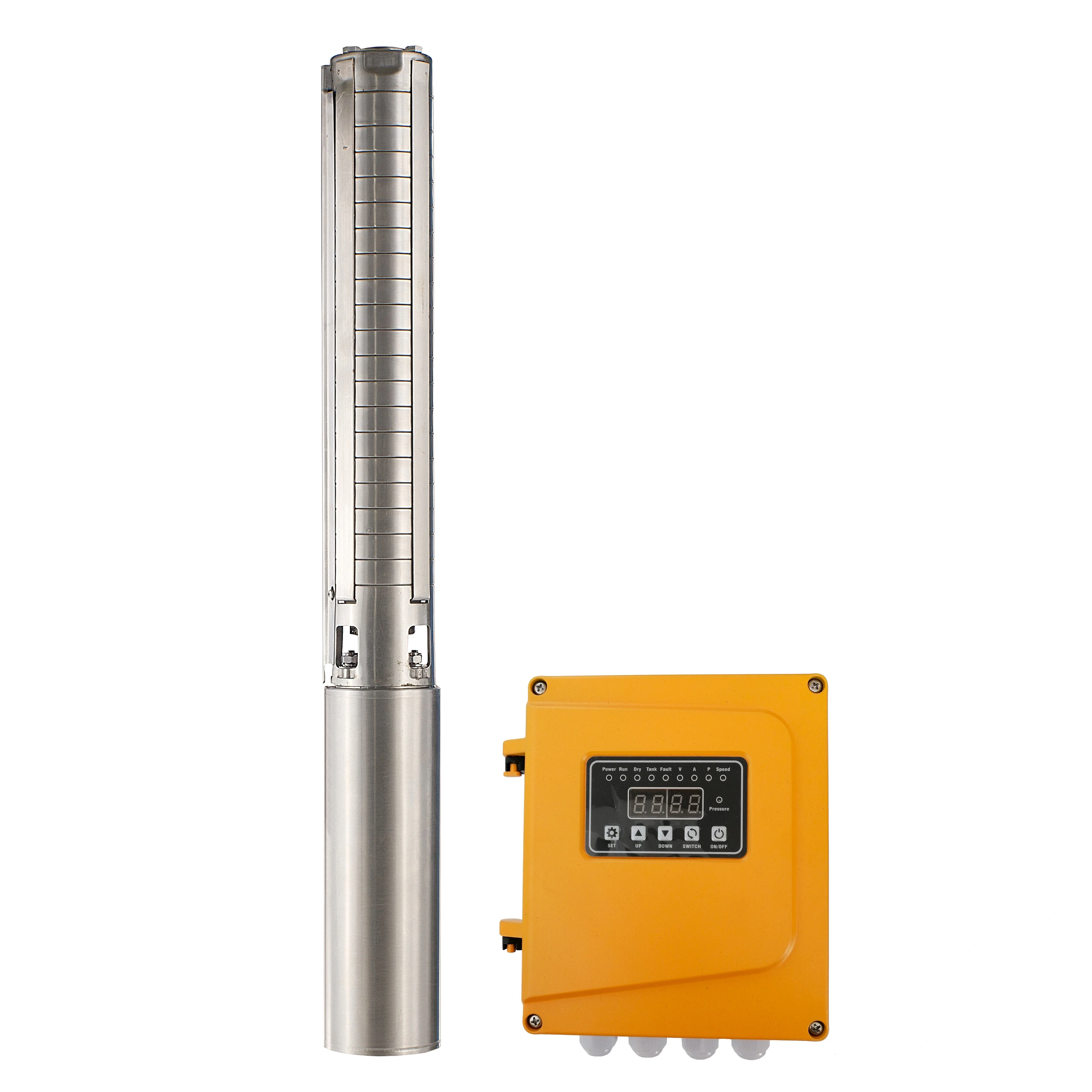
100HS3-188/10-3.0-A/D
High Speed Solar Water Pump for Swim Pool With Controller
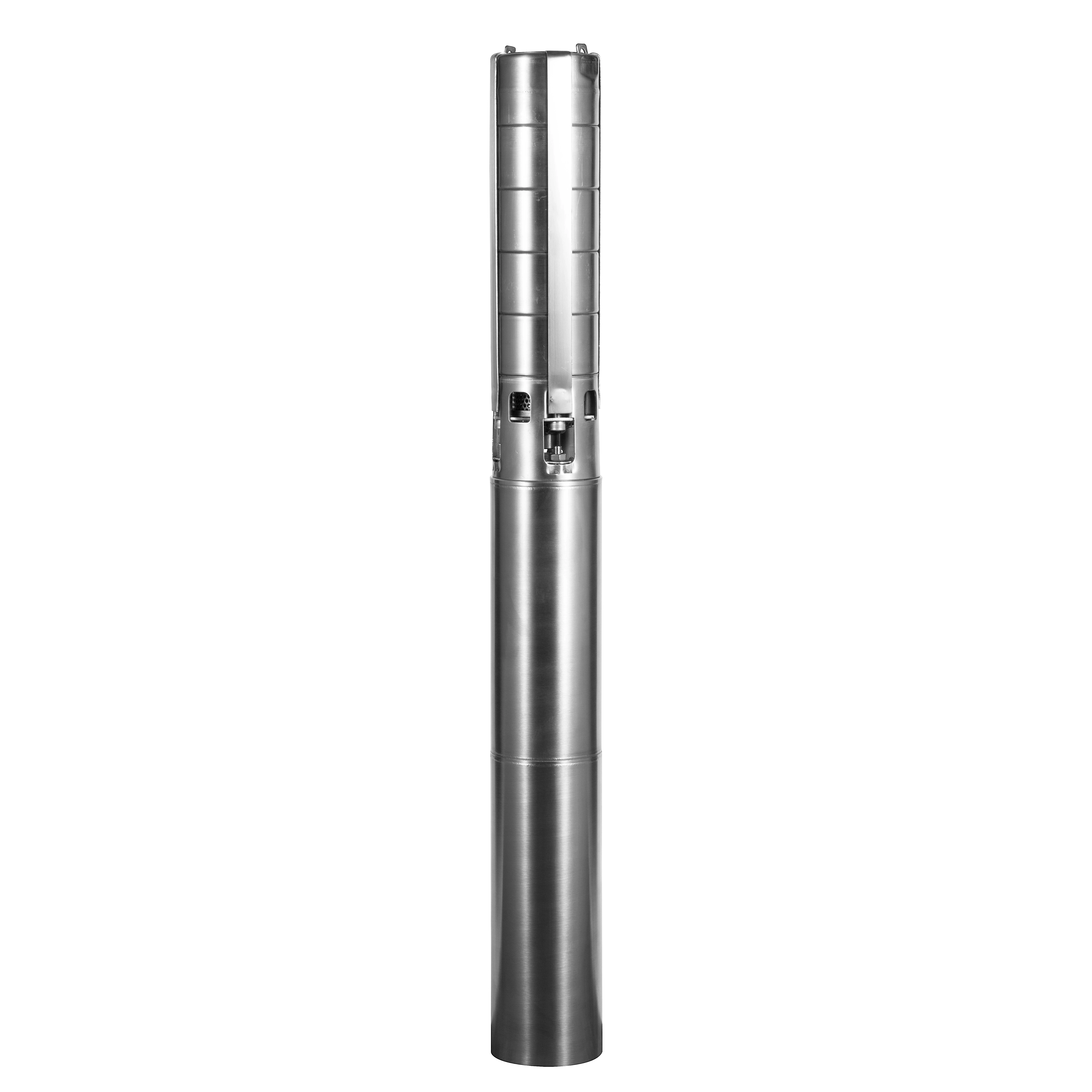
100HS3-256/13-4.0-A/D
5 HP 1.25 Inches DC Solar DC Solar Powered Deep Well for Off-grids Areas

100HS6-110/6-3.0-A/D
4 HP 2 Inches 6T AC/DC Solar Powered Deep Well Water Pump for Livestock
100HS6-156/8-4.0-A/D
5 HP 2 Inches 6T AC/DC Solar Powered Water Pump for off-grids Africa
More Newscases